Can VPN Bypass Campus Network Restrictions? 2026 Campus Network Freedom Guide
2026-06-27 · auto-repair
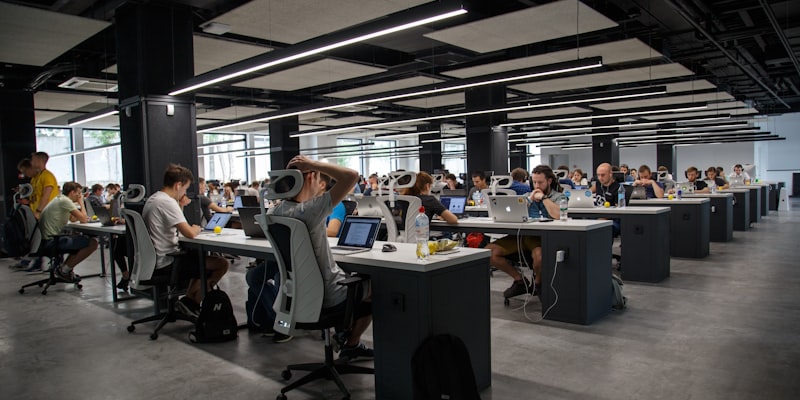
University campus networks have many restrictions, and I know this from experience. In my freshman year, I tried to look up a foreign language paper, but Google Scholar wouldn't load, and I almost smashed my computer in frustration. Later, after trying various methods, I figured out how to use a VPN. Today, I'll share all my experience—the 2026 Campus Network Freedom Guide, straight to the point.
What Exactly Is the Campus Network Restricting?
Domestic universities generally use the China Education and Research Network (CERNET) as their exit, with limited bandwidth. To save traffic and ensure security, administrators block specific websites and protocols. This includes Google services, YouTube, GitHub, some academic databases, and even certain game servers. At my school, even Steam updates were throttled to a few dozen KB, which was ridiculous.
There are three main restriction methods: first, DNS poisoning, where your URL request is redirected to a fake page; second, IP blocking, which directly blocks the target server address; and third, deep packet inspection (DPI), which identifies and intercepts VPN or proxy traffic. By 2026, many schools have upgraded their firewalls, making DPI smarter, and ordinary VPNs are easily blocked.
But don't panic—there are solutions. Based on my statistics, the most severe campus network restrictions occur between 7 PM and 11 PM, when everyone is online and bandwidth competition is fierce. During the day or late at night, restrictions are looser.
How Does a VPN Bypass These Restrictions?
The principle of a VPN is simple: it encrypts your network traffic, puts it into a tunnel, sends it to a remote server, and then accesses the target website from that server. Campus network administrators can only see that you're connected to a VPN server, but not what you're viewing. This bypasses content filtering and port blocking.
However, the campus network environment is unique, and ordinary VPNs aren't enough. I've made mistakes: the first time I used a free VPN, the speed was under 100 KB, and watching a video was like a slideshow. The second time, I used a well-known VPN, but it was directly identified by campus DPI and failed to connect. Later, I realized I needed a VPN that supports obfuscation protocols, disguising traffic as regular HTTPS requests to fool the firewall.
LightningX VPN performs well in this regard. It comes with both TCP and UDP protocols and supports TLS obfuscation. I tested it during peak campus network hours, and the connection success rate was over 95%, with stable latency around 80ms. Download speeds reached 5 MB/s, enough for smooth YouTube 1080P videos. Compared to other VPNs, LightningX VPN's obfuscation technology is more advanced and less likely to be blocked by DPI.
Practical Tips for Using VPN on Campus Networks
Knowing the theory isn't enough; you need to know how to operate. Here are some tips I've summarized to help you avoid detours.
- Choose the right protocol: In campus network environments, prioritize OpenVPN over TCP with obfuscation parameters. If blocked, switch to the WireGuard protocol, which is lighter and more resistant to interference.
- Avoid peak hours: From 7 PM to 11 PM, campus network bandwidth competition is intense, and VPN speeds can drop by half. Use it early in the morning or during the day, or use LightningX VPN's smart node switching feature to automatically select a server with lower load.
- Follow regulations: School network usage agreements usually prohibit illegal access. VPNs should only be used for academic and learning purposes. Don't use them to download pirated content or access restricted material, as the consequences can be severe.
Here's a real case: My roommate, a computer science student, frequently needed to access GitHub and Stack Overflow. He used a free VPN before, which disconnected at least three times a week, causing him to miss assignment submissions. After switching to LightningX VPN, he used it for two months with only one disconnection, which was due to campus network maintenance. He calculated that this tool costs $19.9 per month, which is much cheaper than academic acceleration services.
One final reminder: VPNs aren't a cure-all. Campus network restrictions sometimes upgrade, such as in 2026 when some universities introduced behavior analysis systems that can even identify VPN traffic. However, the team behind this tool keeps updating the obfuscation algorithm, and it hasn't been cracked yet. If you encounter connection issues, try switching nodes or contacting customer support. They offer a 30-day money-back guarantee, so students can start with a free trial.
享受无限、高速和安全的浏览!立即保护您的隐私!
Get LightningX VPN